The story begins
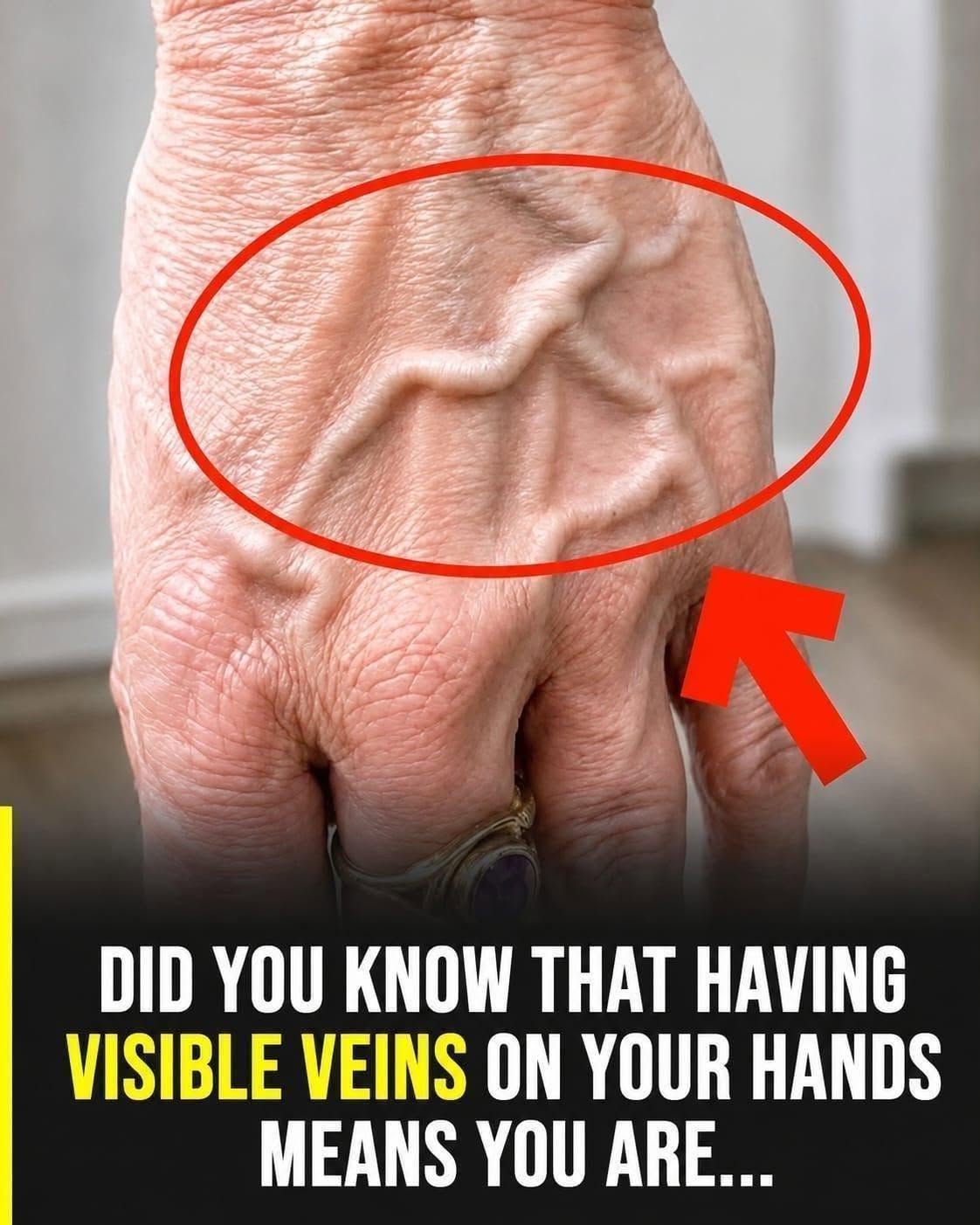
The Mystery Behind Visible Veins Have you ever looked down at your hands or arms on an ordinary day and suddenly noticed a network of vivid blue, green, or purple lines tracing beneath your skin?
For many of us, discovering that our veins look suddenly prominent can bring a brief wave of worry.
We might wonder if it signals an underlying health issue or an unexpected shift in our physical well-being.
Fortunately, for the vast majority of people, highly visible veins are entirely normal.
Rather than a cause for alarm, they are often just a window into how your body functions, adapts, and responds to your daily habits and environment.
Understanding the science behind this common occurrence can help demystify what your body is experiencing.
The Connection Between Body Composition and Fitness One of the most frequent reasons your veins might stand out is your unique body composition.
Beneath your skin lies a layer of subcutaneous fat.
When this layer is relatively thin, the veins underneath are naturally much closer to the surface, making them far more visible.
This is why individuals with a lower body fat percentage or higher muscle mass often have highly defined veins, a trait frequently referred to as vascularity.
If you exercise regularly, especially if your routine includes strength training or high-intensity workouts, you are even more likely to notice this phenomenon.
During physical exertion, your muscles require a rapid delivery of oxygen and nutrients.
To meet this demand, your heart pumps harder, and your blood flow increases significantly.
The turning point
This extra pressure causes your blood vessels to dilate and expand.
While this expansion is temporary, consistent exercise can lead to more developed muscle tissue, which pushes the veins closer to the surface of the skin even when you are at rest.
The Natural Evolution of Your Skin Another significant factor in the visibility of your veins is the natural aging process.
Over the years, our skin undergoes gradual changes in its structure.
Two vital proteins, collagen and elastin, which provide our skin with its firmness, elasticity, and thickness, slowly begin to deplete as the years pass.
As the skin becomes thinner and less resilient, the structures resting just beneath it—including your veins—become much more apparent.
This shift is particularly noticeable on the back of the hands and the forearms.
These areas naturally have very delicate skin to begin with, and they are constantly subjected to external stressors like sun exposure, environmental elements, and the wear and tear of daily activities.
The combination of thinning skin and regular sun exposure can make veins look much more prominent as we age, which is a completely standard and harmless part of life.
How Heat and Temperature Regulate Your Veins Have you ever noticed that your veins seem to pop out much more after a hot shower, a session in a sauna, or during a humid summer day?
This is not a coincidence; it is a direct result of your body's built-in temperature regulation system.
When your core temperature rises, your body works to cool itself down and maintain balance.
One of the primary ways it achieves this is through a process called vasodilation.
What came next
During vasodilation, the blood vessels near the surface of your skin widen to allow more blood to flow closer to the exterior of your body, releasing excess heat into the surrounding air.
This widening makes your veins swell and appear much more pronounced.
Once you cool down, your blood vessels will naturally constrict again, and your veins will likely return to their usual appearance.
The Role of Genetics and Skin Tone Beyond fitness, age, and temperature, simple genetics play a massive role in how visible your veins are.
Some people are genetically predisposed to having superficial veins that sit closer to the skin's surface.
Additionally, your natural skin tone can influence this visibility.
Those with very fair or translucent skin will naturally see the contrast of their blue or green veins much more clearly than those with darker skin tones, regardless of their health or fitness levels.
When to Consult a Professional While prominent veins are almost always a benign characteristic of your body's natural state, it is always wise to pay attention to sudden or painful changes.
If your visible veins are accompanied by swelling, persistent pain, a feeling of heaviness in your limbs, or if they appear swollen, twisted, and dark purple (which can indicate varicose veins), it is a good idea to speak with a healthcare professional.
They can offer personalized advice and ensure that your circulatory system is functioning exactly as it should.
Embracing Your Body's Unique Signals Ultimately, our bodies are dynamic systems that constantly adjust to our lifestyles, environments, and the passage of time.
Visible veins are usually just a sign of an active circulatory system, a lean physique, or the natural grace of aging skin.
By understanding these factors, you can view your prominent veins not as a source of worry, but as a fascinating reflection of the complex, living system that keeps you moving every day.
Originally published on TrendsMix.

