The story begins
Every now and then, a beauty secret takes the internet by storm, promising youthful skin with minimal effort and cost.
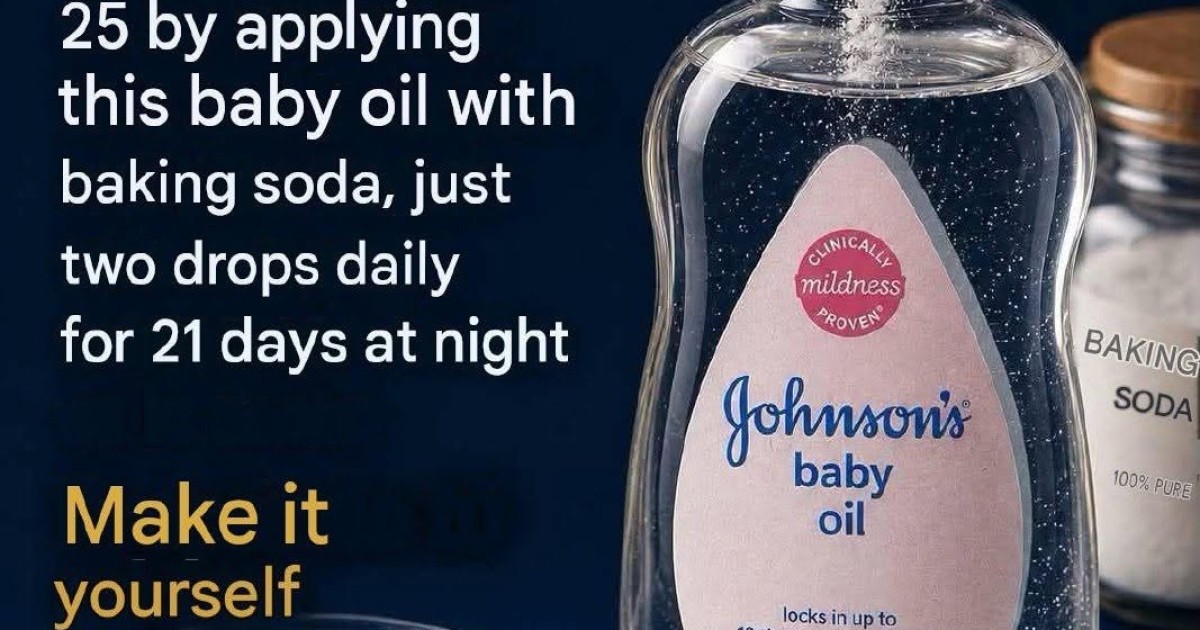
Recently, a striking claim has been circulating online, capturing the attention of social media users: a story of a 49-year-old mother who supposedly looks 25 by applying a mixture of baby oil and baking soda for just 21 days.
It is a headline designed to make anyone pause.
The idea of reversing decades of skin aging using two inexpensive, everyday household items is incredibly appealing.
But does this viral remedy actually work, or is it a recipe for skin irritation?
As we explore the world of DIY beauty, Readers should look past the sensational claims and examine the actual science behind these ingredients.
Let us dive into what happens when you mix baby oil and baking soda, and whether this combination belongs on your face.
The Allure of Household Skincare Hacks It is easy to understand why DIY skincare trends gain traction so quickly.
Commercial anti-aging serums and creams can be remarkably expensive, often costing a fortune for a tiny bottle.
When a budget-friendly alternative promises similar or even superior results, it feels like a major victory for consumers.
Additionally, there is a common belief that simple, familiar ingredients are inherently safer or more honest than complex chemical formulations.
However, just because an ingredient is safe for baking or baby care does not mean it is suitable for the delicate skin on your face, especially when combined in untested ways.
A Closer Look at Baby Oil: Hydration vs.
Nutrition To understand how this mixture affects the skin, we must first look at its components individually.
Baby oil is primarily made of mineral oil, which is a highly refined derivative of petroleum.
In the cosmetic world, mineral oil is classified as an occlusive agent.
An occlusive does not actually add moisture to the skin.
The turning point
Instead, it sits on top of the skin's surface, creating a physical barrier that prevents water from evaporating.
This process is highly effective for keeping dry skin hydrated by locking in existing moisture.
For babies, it helps protect sensitive skin from friction and wetness.
However, baby oil does not contain active anti-aging nutrients.
It lacks the vitamins, peptides, antioxidants, and essential fatty acids found in modern skincare products that actively repair skin damage, support collagen production, or target fine lines.
While it can make your skin feel temporarily soft, it does not offer long-term restorative benefits.
Baking Soda: A Risky Exfoliant The second ingredient in this viral mixture is sodium bicarbonate, commonly known as baking soda.
In DIY beauty circles, baking soda is often celebrated as a cheap, natural exfoliant.
Its fine, crystalline texture can physically scrub away dead skin cells, leaving the skin feeling smoother immediately after use.
Despite this temporary smoothing effect, baking soda poses significant risks when applied to the face.
The primary issue lies in its pH level.
Healthy human skin is naturally acidic, typically maintaining a pH between 4.5 and 5.5.
This acidic environment, often called the acid mantle, is crucial for keeping harmful bacteria out and moisture in.
Baking soda, on the other hand, is highly alkaline, with a pH of around 9.
Applying such a strong alkaline substance to the skin can severely disrupt the acid mantle.
This disruption can strip away natural protective oils, leading to dryness, redness, irritation, and an increased susceptibility to breakouts.
Over time, repeated use of baking soda can compromise the skin barrier, making it more prone to premature aging rather than preventing it.
What came next
What Happens When You Combine Them?
When you mix baby oil and baking soda, you are essentially combining a heavy occlusive barrier with a harsh, alkaline abrasive.
Proponents of the trend suggest that the baby oil buffers the harshness of the baking soda, while the baking soda provides deep exfoliation.
In reality, this combination can be problematic.
The physical scrubbing action of baking soda can create micro-tears in the skin barrier.
When you seal those micro-tears with a heavy occlusive like baby oil, you risk trapping bacteria, dirt, and dead skin cells underneath the barrier.
For individuals with acne-prone or sensitive skin, this can lead to clogged pores, severe breakouts, and persistent irritation.
Furthermore, the claim that this mixture can make a 49-year-old look 25 in just 21 days is biologically unrealistic.
True skin regeneration and collagen support take time and require specific active ingredients, such as retinoids, vitamin C, and peptides, which are entirely absent from this DIY recipe.
Safer Ways to Achieve a Youthful Glow If you are looking to achieve glowing, healthy-looking skin without risking damage, there are much safer and more effective alternatives available: Gentle Exfoliants: Instead of physical scrubs like baking soda, consider chemical exfoliants.
Alpha hydroxy acids (AHAs) like lactic acid, or beta hydroxy acids (BHAs) like salicylic acid, gently dissolve the bonds between dead skin cells without harsh scrubbing, respecting the skin's natural pH.
Nourishing Oils: Look for nourishing oils that offer more than just occlusive benefits.
Rosehip seed oil, argan oil, and squalane are excellent choices that hydrate the skin while delivering essential fatty acids and antioxidants.
Consistent Sun Protection: Sunscreen remains one of the most effective anti-aging tools available, protecting your skin from the UV damage that causes the majority of visible aging.
Prioritizing Long-Term Skin Health While the idea of a simple, two-ingredient miracle cure is enticing, skincare is rarely that straightforward.
The viral baby oil and baking soda trend may offer a brief sensation of smoothness, but the long-term risks of disrupting your skin’s natural barrier far outweigh the temporary benefits.
To maintain healthy, radiant skin as you age, it is usually best to rely on gentle, pH-balanced products designed specifically for facial care.
Originally published on TrendsMix.

